
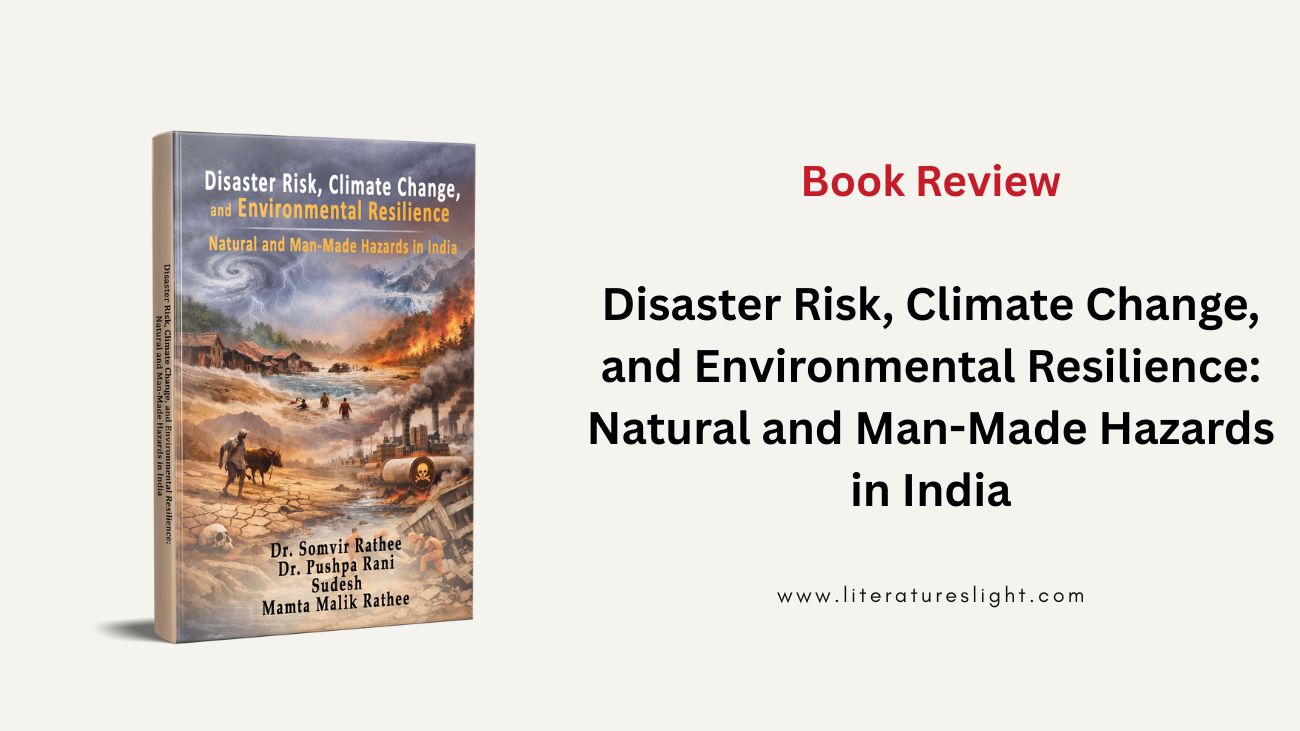
Review: Disaster Risk, Climate Change, and Environmental Resilience in India
Disaster Risk and Climate Change in India is a growing area of academic and practical concern. Increasing natural and man-made hazards are affecting lives, livelihoods, and ecosystems across the country. The book Disaster Risk, Climate Change, and Environmental Resilience: Natural and Man-Made Hazards in India by Dr. Somvir Rathee, Dr. Pushpa Rani, Sudesh, and Mamta Malik Rathee provides a clear and student-friendly understanding of these complex issues. It connects disaster studies with climate and environmental awareness, focusing especially on Indian conditions.
Understanding Disaster Risk in the Indian Context
India faces a wide range of disasters due to its diverse geography and climatic conditions. Earthquakes, floods, cyclones, droughts, landslides, and heatwaves occur frequently. Alongside these natural hazards, man-made disasters such as industrial accidents, urban flooding, deforestation, and pollution have increased disaster risk.
Natural Hazards and Their Characteristics
Natural hazards arise from environmental and geological processes. In India, floods are common due to monsoon rainfall and river systems, while cyclones affect coastal regions. Earthquakes are frequent in Himalayan and northeastern regions. The book explains these hazards by focusing on how natural systems function and how extreme conditions transform normal processes into disasters.
Man-Made Hazards and Human Influence
Man-made hazards are often linked to human activities that disturb environmental balance. Rapid urbanization, poor land use planning, mining, and industrial growth increase vulnerability. The authors clearly explain how human decisions can intensify disaster impacts, turning hazards into large-scale emergencies.
Climate Change and Its Role in Disaster Risk
Climate change plays a significant role in increasing disaster risk in India. Rising temperatures, changing rainfall patterns, and extreme weather events are becoming more frequent. The book connects climate science with disaster studies in a simple and understandable way, making it suitable for students from different backgrounds.
Climate Variability and Extreme Events
Climate variability affects monsoon behavior, glacier melting, and sea-level rise. These changes increase the intensity of floods, droughts, and coastal hazards. The book highlights how climate change acts as a risk multiplier, making existing hazards more dangerous and unpredictable.
Atmosphere, Weather, and Disasters
A key strength of the book is its explanation of atmospheric processes. It explains how weather systems, pressure patterns, and temperature variations influence disasters. By understanding the atmosphere, students gain insight into why disasters occur rather than just their consequences.
Environmental Resilience and Landscape Understanding
Environmental resilience refers to the ability of ecosystems and communities to absorb shocks and recover from disasters. The book emphasizes understanding natural landscapes such as rivers, forests, mountains, and coastal zones to reduce disaster risk.
Role of Natural Landscapes
Healthy ecosystems act as natural buffers against disasters. Forests reduce landslides, wetlands absorb floodwaters, and mangroves protect coastlines from cyclones. The authors explain these concepts using real examples from India, helping readers understand the importance of environmental conservation.
Human Adaptation and Response
Instead of focusing on policies or technical instructions, the book emphasizes understanding how societies respond to disasters. It explores traditional knowledge, settlement patterns, and adaptation practices that have evolved over time. This approach helps students appreciate the social and cultural dimensions of disaster risk.
Structure and Academic Value of the Book
The book is divided into two well-organized parts. The first part introduces basic concepts of disasters, types of hazards, and societal responses. The second part focuses on climate, atmosphere, and environmental processes that shape disaster risks. This structure allows gradual learning and conceptual clarity.
Learning-Oriented Approach
The authors prioritize explanation and understanding over technical language. Simple illustrations and real-life examples make complex topics accessible. This makes the book suitable for undergraduate and postgraduate students in geography, environmental studies, disaster management, and related disciplines.
Support for Independent Reading
The book is also useful for independent learners who want to understand disaster risk and climate change in India. Clear language and logical flow encourage self-study and critical thinking.
Conclusion
Disaster Risk, Climate Change, and Environmental Resilience: Natural and Man-Made Hazards in India is a valuable academic resource that bridges disaster studies, climate science, and environmental awareness. By focusing on understanding rather than policy prescriptions, it helps readers grasp why disasters occur and how environmental conditions shape risk. For students and readers interested in Disaster Risk and Climate Change in India, this book offers a strong conceptual foundation and practical insights grounded in real Indian examples.