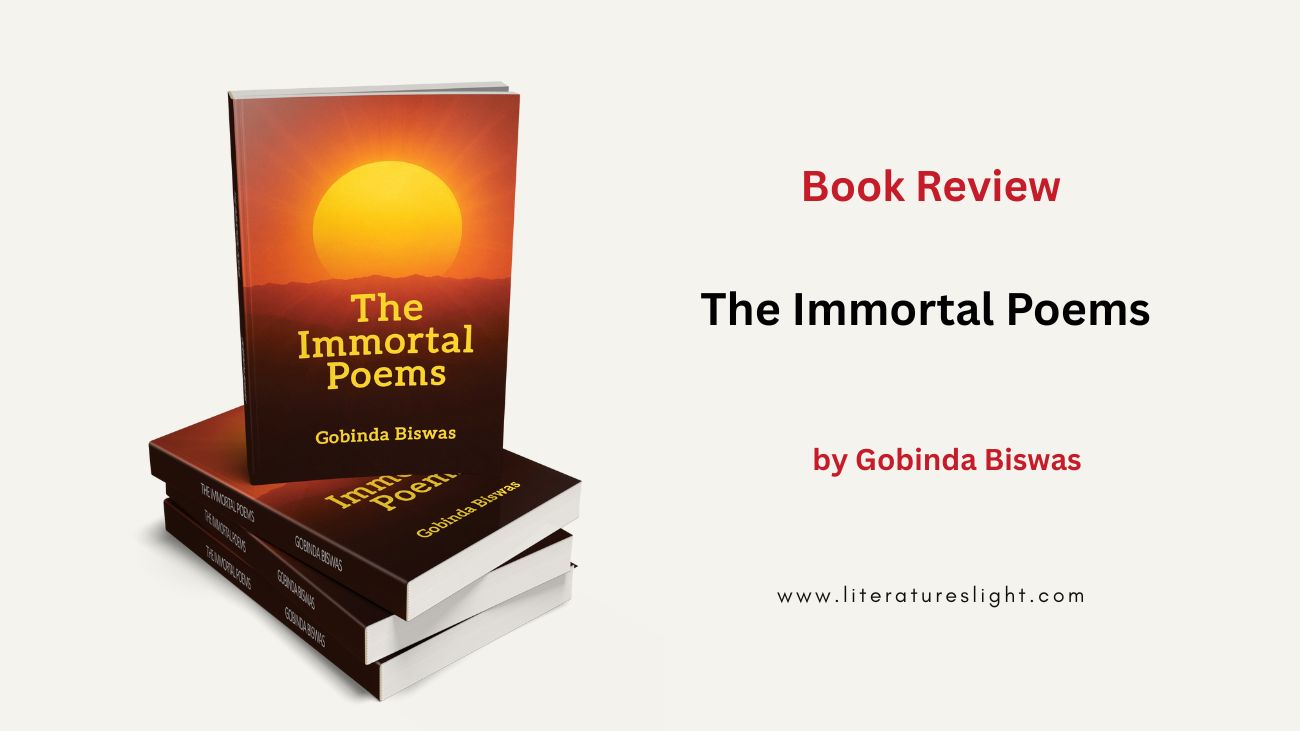
The Immortal Poems by Gobinda Biswas: A Global Voice of Humanity and Conscience
The Immortal Poems by Gobinda Biswas is a powerful collection that reflects the poet’s deep concern for humanity, nature, and moral values. Written in English, this book brings together 100 poems of varied themes, emotions, and social relevance. Gobinda Biswas, already known for his significant contribution to contemporary English poetry, once again proves his literary strength through this thoughtful and emotionally rich volume.
This collection is not limited to personal emotions alone. It extends to global issues such as war, migration, hunger, women empowerment, and humanism. The Immortal Poems stands as a mirror to society and a call for compassion, justice, and unity.
A Book Framed by International Literary Voices
One of the most remarkable aspects of The Immortal Poems by Gobinda Biswas is its global literary support. The foreword is written by the world famous poet Mrs. Rebecca Lowe from Swansea and London in the United Kingdom. Her association with the book adds international recognition and credibility.
Global Poets on the Back Cover
The back cover features reflections by four well known poets from different continents, symbolizing the universal appeal of Gobinda Biswas’s poetry.
Voices from Across the World
Mrs. Gelda Castro from Rio de Janeiro, Brazil represents South America.
Mr. Richard Spisak from Pennsylvania, USA represents North America.
Mrs. Joan Santillan Amurao from the Philippines represents Asia.
Mr. Nicholas Kawinga from Zambia represents Africa.
Their presence highlights how the themes of this book resonate beyond borders and cultures.
Diversity of Themes in The Immortal Poems
Like his six previous poetry books, Gobinda Biswas explores a wide range of subjects. Each poem carries a strong message rooted in empathy and awareness. The diversity of themes makes this book appealing to readers of different tastes and age groups.
Love in Its Many Forms
The collection includes poems on individual love, social love, and world love. These poems are gentle yet profound, emphasizing emotional connection, understanding, and shared responsibility. The poet also touches devotional love, reflecting a spiritual bond grounded in human values rather than rigid beliefs.
Poetry Against War and Destruction
War and civil war appear as recurring concerns in the book. In the poem Children, No War against Mother, Gobinda Biswas presents a powerful metaphor where greedy human actions are portrayed as a war against Mother Nature. This poem strongly criticizes environmental destruction and irresponsible development.
In No more Mushroom Cloud, the poet expresses his horror at the devastating impact of nuclear weapons, inspired by the tragedies of Hiroshima and Nagasaki. The poem stands as a plea for peace and nuclear disarmament.
Voices of the Marginalized and the Suffering
Gobinda Biswas gives voice to those often ignored by society. His poetry becomes a platform for the oppressed, the poor, and the displaced.
Migrant Labourers and Social Pain
In We are Migrant Labourers, the poet captures the suffering, uncertainty, and silent endurance of migrant workers. The poem reflects real social pain and reminds readers of the dignity of labor and the human cost of economic imbalance.
Hunger, Famine, and Death
Themes of hunger and famine are addressed with sensitivity and realism. The poet does not romanticize suffering but presents it as a harsh truth that demands attention and action. Death, in his poems, often becomes a reminder of moral responsibility and virtue.
Humanism as the True Religion
One of the most striking poems in the collection is The Religion of God. Here, Gobinda Biswas declares that the true religion of God is Humanism. This poem rejects divisions created by man made ideologies and promotes compassion, equality, and respect for all lives.
In Man made Divisions, the poet further explores how artificial boundaries of race, religion, and nationality cause conflict and suffering. His message is clear and timeless.
All Lives and Women Empowerment
In All Lives Matter, the poet emphasizes the value of every human life without discrimination. The poem calls for equality, justice, and empathy in a divided world.
Women empowerment is another significant theme. In Women, Wake Up, Gobinda Biswas outlines a vision of strength, awareness, and resistance. He portrays women as powerful agents of change rather than victims.
In The Female Body Wanted to Survive, the poet depicts the trauma and panic experienced by raped women. The poem is deeply moving and confronts the harsh realities faced by women in society.
Why The Immortal Poems Matters Today
The Immortal Poems by Gobinda Biswas is more than a poetry book. It is a social document, a moral guide, and a voice of conscience. In an age marked by conflict, environmental crisis, and social inequality, this book offers reflection and hope.
Readers who seek meaningful poetry that addresses real world issues will find this collection deeply satisfying. It is suitable for students, scholars, poetry lovers, and anyone concerned about humanity’s future.
Where to Buy The Immortal Poems by Gobinda Biswas
The book is available online through the following platforms:
Amazon India: https://www.amazon.in/dp/9349168200
Kindle Edition: https://www.amazon.in/dp/B0G7DJBXP1
Flipkart: https://www.flipkart.com/product/p/itme?pid=9789349168206
The Immortal Poems by Gobinda Biswas deserves a place on the shelf of every reader who believes in poetry with purpose and global relevance.