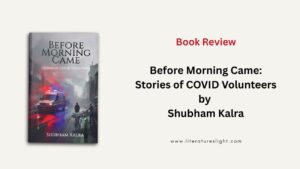
Congratulations on the release of Before Morning Came. What inspired you to turn these experiences into a book?
I think the biggest reason was that these stories just refused to leave me.
At first, I never sat down with the intention of writing a book. It was not a planned project. It came much later. During the COVID period, especially in the second wave, there were just too many nights, too many calls, too many families, and too many moments that stayed behind even after everything looked “normal” again from the outside.
Some people survived. Some did not. Some families came back, but in smaller forms. Some volunteers stopped getting calls, but those voices never really left them. I think I carried a lot of that quietly for a long time.
What pushed me toward the book was the fear that if I did not write these stories down, they would slowly get reduced to memory fragments, and eventually to statistics. And what happened in those months was far more human than any statistic can ever hold. There was grief, yes, but there was also dignity, helplessness, courage, exhaustion, tenderness, and the strange way strangers kept showing up for one another.
In the end, I think I wrote it because some nights deserved witness. And some people deserved not to be forgotten.
Your book focuses on COVID volunteers in India. What made you choose this perspective instead of a broader pandemic narrative?
Because that was the side of the pandemic I saw most closely, and honestly, it was also the side that stayed with me the longest.
A broader pandemic narrative can cover policies, numbers, lockdowns, hospitals, and headlines, and all of that matters. But I was drawn to the volunteer perspective because it sits in a very human space between the family and the system. Most of the volunteers were just ordinary people trying to help in extraordinary situations. That made their role deeply personal, fragile, and real.
They were the ones answering midnight calls, searching for blood, finding leads, coordinating beds, calming attendants, arranging funds, and sometimes simply staying on the phone with a stranger who had no one else to turn to. They saw the panic up close.
I chose this perspective because it allowed me to tell the pandemic not as an event, but as a lived experience. Through volunteers, I could also tell the story of families, patients, loss, survival, and what remained possible inside people when everything else was falling apart.
Many stories in the book feel deeply personal. How did you approach collecting and preserving these experiences?
Very carefully, and honestly with a lot of emotional responsibility.
Most of them came from lived moments, calls, follow-ups, memories, and people I could never fully forget after those nights. Some stayed with me because of what happened. Others stayed because of how they made people feel, including me.
While writing, I was very conscious that these were not just incidents. They were somebody’s worst days, somebody’s loss, somebody’s family, somebody’s unanswered question. So preserving them was never only about remembering facts. It was also about protecting dignity. That is why I chose to anonymize many details and keep the writing focused on the emotional truth rather than turning the stories into case files.
I also did not want the book to sound sensational or overly polished. The pandemic was already heavy enough. So my approach was to hold on to what mattered most: the feeling, the humanity, the helplessness, the courage, and the quiet details that statistics can never carry.
In a way, I was not just collecting stories. I was trying to make sure they were remembered with care.
Was there a particular story or moment during the pandemic that stayed with you the most?
Yes, there were many, but if I had to choose, the ones that stayed the longest were not always the loudest ones.
One of the most difficult things to witness was how grief and responsibility kept arriving together. There were cases where a family had just lost someone, but even in that moment they were still being forced to think about bills, transport, hospital formalities, siblings, or what would happen next. That stayed with me deeply, because it showed how poverty does not even allow some people the space to grieve properly.
But being honest, what stayed with me the most was this feeling: how close life and loss were during those months. Sometimes one bed, one donor, one call, or even one hour could change the direction of a family. That kind of closeness changes how you remember everything.
The book avoids glorifying volunteers and instead shows their struggles. Why was that important to you?
That was very important to me because I never wanted the book to turn into a clean, heroic version of something that was actually messy, exhausting, emotional, and often heartbreaking.
I do think the book honours volunteers, and it should. What many of them did during that time mattered. They showed up for strangers, stayed awake through impossible nights, kept following leads, made calls, arranged blood, found beds, raised funds, and stood beside families when there was often no one else around. So I did not want to underplay their role.
At the same time, I also did not want to romanticise it too much. If I had glorified them too much, I think the truth would have become flatter.
The truth is, most volunteers were ordinary people. They were not superheroes. They were scared, exhausted, emotionally affected, and often learning everything in real time. Many of them were carrying their own family fears while trying to help somebody else’s family survive. That human struggle was important to keep.
For me, the real superheroes of that period were the doctors and healthcare workers. They were the ones standing closest to life and death every single day.
So I wanted the book to hold volunteers with respect, but also with honesty. I wanted them to be seen as human beings who tried their best in a broken time, not as perfect heroes. I think that makes their efforts more real, and in some ways, more meaningful.
How did your own experience as a volunteer shape the way you wrote this book?
It shaped almost everything, honestly.
Because I was not looking at these events from a distance. I was inside them in whatever small way I could be, through calls, follow-ups, hospital coordination, blood requests, fundraising, late-night searches, and conversations with families who were often speaking from the worst moments of their lives. That changes the way you remember things.
My experience as a volunteer also made me write with more restraint. I had seen too much pain up close to turn it into something dramatic or polished just for effect. I wanted the stories to feel human, not performed.
At the same time, being a volunteer showed me that these stories were never only about crisis. They were also about people. About how strangers became support systems, how ordinary individuals stepped in when systems slowed down, and how even small acts could matter deeply in the right moment.
So I think my volunteer experience shaped the book in two ways. It gave me access to the emotional truth of those nights, and it also made me careful about how I held that truth on the page.
Writing about such emotionally heavy events can be challenging. How did you manage the emotional toll while working on the book?
Honestly, I do not think I fully managed it. I just learned how to sit with it while writing.
Some stories were easier to write than others, but a few were genuinely difficult to return to. Not because I had forgotten them, but because I had not. While writing, I often found that I was not just remembering what happened. I was also remembering how it felt at the time. A voice on a call. A delay. A sentence someone said when they were breaking. Those things come back very quickly.
What helped me was not trying to force the writing in one stretch. I wrote slowly. Sometimes I stepped away. Sometimes I let a story sit for a while before coming back to it. I also kept reminding myself that the purpose was not to relive pain for the sake of it, but to hold these experiences honestly and with dignity.
In a strange way, writing the book was also a form of release. Heavy, yes, but necessary. Some of these stories had stayed with me for a long time, and putting them into words gave them a place to rest outside my own memory.
So I would say the emotional toll was real, but so was the need to write it. And that need was stronger.
What do you hope readers take away from Before Morning Came?
First, I hope they remember that the pandemic was never only about numbers. It was about people. Families. Calls made in panic. Long nights. Delayed help. Small acts that mattered more than they seemed. So much of that time has already been reduced to statistics, and I wanted this book to bring back the human weight behind those numbers.
Second, I hope the book leaves readers with a deeper respect for ordinary people who showed up when they did not have to. Not in a glorified way, but in an honest one. Volunteers, families, donors, officials, neighbours, doctors, healthcare workers, and strangers all became part of each other’s survival in different ways. That is something worth remembering.
More than anything, I hope readers feel that even in one of the darkest times, humanity did not disappear completely. It was tired, imperfect, and often overwhelmed, but it was still there. And sometimes, it was enough to keep one more person from being completely alone.
Do you think stories like these can change how people view crisis, empathy, and community support?
I think they can, but maybe not in a dramatic way.
A book like this may not change how everyone thinks overnight, but it can make people pause and look at a crisis more closely. Most people remember the pandemic through numbers, news, lockdowns, and fear. What often gets lost is how personal it all was. One family searching for a bed. One volunteer staying up all night for a stranger. One patient becoming a financial crisis as much as a medical one.
Stories bring that part back.
I also think they can make empathy more real. Not bigger, just more specific. It is easy to say a situation was tragic. It is different to understand what that tragedy actually looked like inside a home or outside a hospital gate.
As for community support, I think the book reminds people that in difficult times, systems matter, but people matter too. A lot of help during those months came from ordinary individuals who chose to respond, sometimes in small ways, sometimes in life-changing ones.
So yes, I do think stories like these can shift perspective, but maybe quietly. They can make people remember that in a crisis, support is not an abstract idea. It often comes down to whether someone decides to answer, show up, or stay.
Congratulations again on your book. Are you on social media, and how can readers connect with you?
Thanks, that means a lot.
Yes, readers can definitely connect with me on social media. I’d genuinely be happy to hear from people who connect with the book, especially because a lot of these stories come from a time that many of us are still carrying in different ways.
They can reach me on Instagram at @shubhamkalraofficial and can also write to me at shubham@branditify.com.
I’d be glad to hear from readers, whether it is about the book, their own memories from that time, or simply their thoughts after reading it.
Where can readers buy Before Morning Came?
Readers can buy Before Morning Came in both paperback and ebook formats across multiple platforms, including Amazon.in, Amazon.com, Flipkart, Kindle, Google Play, Google Books, and also directly through the LiteraturesLight store.
So whether someone is reading in India or outside India, the book is available in both print and digital formats across the major online platforms.
Thank you for answering our questions. What’s next for you as a writer?
I am still very new to writing in the formal sense, so right now I do not want to pretend I have some big, fixed plan as a writer.
What I do know is that this book has made me take writing more seriously. It showed me that some stories stay with you for a reason, and sometimes the right thing to do is to give them shape instead of just carrying them privately.
So I think what comes next for me will still be rooted in real human experiences. I do not know yet whether the next book will be in the same space or something very different, but I know I want it to feel honest. And if I look ahead, I do see myself moving toward fiction. Not fiction just for plot, but fiction with feeling, memory, and truth in it.
For now, I am less interested in calling myself a writer and more interested in writing something that genuinely stays with people. If I can keep doing that, I think the rest will figure itself out.
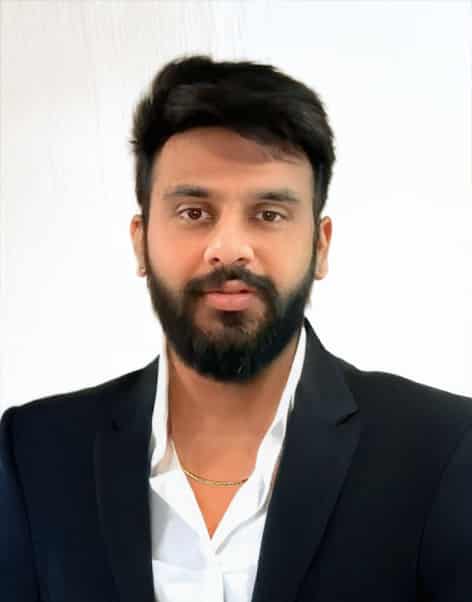
Author Shubham Kalra
Shubham Kalra is an entrepreneur, storyteller, and creative professional working across branding, communication, and business-building. He is the founder of Branditify, a creative and digital agency, and is also involved in ventures such as ClothingSutra. His work brings together strategy, storytelling, and human understanding, with a strong interest in building ideas that connect emotionally as well as creatively. Over the years, he has worked closely with brands, people, and projects that required not only communication, but clarity, empathy, and the ability to see stories where others often see only information. That instinct to observe, document, and hold on to what matters has shaped much of his creative journey. During the COVID period, he also became part of volunteer efforts that supported families through medical emergencies, blood requirements, hospital coordination, fundraising needs, and other urgent forms of help. The experiences of that time stayed with him deeply and became an important part of how he now understands people, crisis, resilience, and memory. Alongside his business ventures, Shubham remains deeply interested in stories that reveal what people carry, how they survive, and what remains of humanity in difficult times. His approach to work and writing is rooted in honesty, emotional depth, and the belief that some stories deserve to be remembered with dignity. Before Morning Came is his first book.