
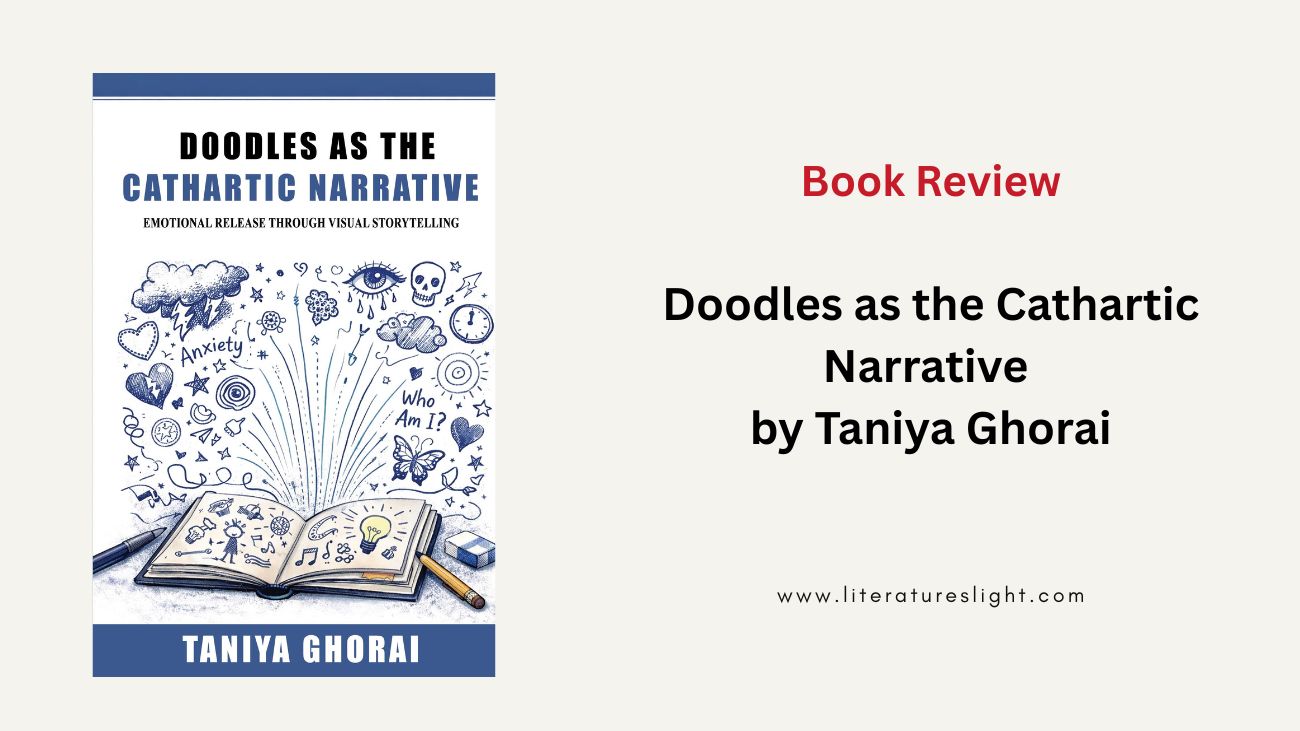
Doodles as the Cathartic Narrative by Taniya Ghorai
Doodles are frequently dismissed as idle marks made without intention or meaning. In Doodles as the Cathartic Narrative, Taniya Ghorai challenges this reductive view by presenting doodling as a deeply expressive narrative practice. The book investigates how doodles function as powerful tools of emotional articulation and psychological release. Positioned at the crossroads of literary studies, visual culture, and psychology, the work argues that doodles are not marginal embellishments but essential narrative forms capable of communicating complex inner states.
Ghorai’s study foregrounds doodles as non verbal narratives that allow emotions to surface when language proves insufficient. Through careful analysis, the book reframes doodling as a cathartic process that enables individuals to process anxiety, vulnerability, and self awareness. This approach broadens conventional understandings of storytelling and invites readers to engage with literature as a multimodal emotional experience.
Doodling, Catharsis, and Emotional Expression
Central to the book is the idea of catharsis, drawn from both classical literary theory and modern psychology. Ghorai conceptualizes doodling as an instinctive act through which emotions are negotiated and released. Unlike structured verbal expression, doodling offers freedom from grammatical and narrative constraints, allowing for spontaneous emotional expression.
Non Verbal Storytelling and Inner Experience
Doodles operate as visual reflections of inner psychological landscapes. Especially within adolescent and coming of age narratives, emotions often remain unspoken or partially understood. Ghorai demonstrates that doodles create an alternative expressive channel where these emotions can be externalized. They become visual traces of thought, memory, and feeling, offering insight into characters’ internal struggles and moments of self reflection. This perspective positions doodling as an essential narrative strategy rather than an incidental artistic feature.
Visual Storytelling in the Novels of Karen Romano Young
A significant portion of the book is devoted to close readings of selected novels by Karen Romano Young. Ghorai examines how visual storytelling operates alongside textual narration to enrich emotional depth. The doodles embedded in these novels are not decorative interruptions but active contributors to narrative meaning.
Doodles as Narrative Rhythm and Structure
Doodles influence the pacing and rhythm of the narrative by creating pauses that mirror moments of introspection. These visual elements slow the reading process, encouraging readers to engage emotionally with the text. Ghorai argues that such pauses simulate the psychological process of reflection, allowing readers to inhabit the characters’ emotional states more fully. As a result, the reader’s engagement becomes both cognitive and affective.
Interdisciplinary Approach and Cultural Context
One of the book’s key strengths lies in its interdisciplinary framework. Ghorai bridges literary criticism with theories of graphic narrative, affect studies, and psychology. This approach enables a nuanced understanding of doodling as both a cultural and psychological phenomenon.
From Marginal Scribbles to Meaningful Communication
Historically, doodles have been regarded as trivial or accidental. Ghorai traces their evolution into recognized forms of visual communication within contemporary culture. By situating doodling within broader artistic and literary traditions, the book highlights its growing legitimacy as a narrative medium. Doodles emerge as sites of emotional resilience, particularly in narratives that address identity formation, mental health, and personal growth.
Scholarly Contribution and Audience
Doodles as the Cathartic Narrative is intended for scholars and students of literature, visual culture, psychology, and education. Its emphasis on close textual and visual analysis makes it particularly valuable for research on graphic narratives and experimental storytelling. The book also holds relevance for educators interested in alternative modes of emotional expression and multimodal learning practices.
Taniya Ghorai’s Critical Vision
Taniya Ghorai is a scholar of English Literature whose academic work spans contemporary criticism, classical drama, and cultural studies. Her co authored book Cultural Athenaeum and her research on diasporic identity reflect her engagement with questions of displacement, belonging, and cultural memory. Doodles as the Cathartic Narrative emerges from this broader intellectual commitment to literature as a space for emotional articulation and narrative innovation.
Conclusion
By redefining doodles as cathartic narratives, Taniya Ghorai challenges traditional literary hierarchies that privilege text over image. The book affirms that visual expression can communicate emotional truths where language falters. Ultimately, Doodles as the Cathartic Narrative invites readers to recognize doodling as a meaningful, transformative, and emotionally resonant form of storytelling in contemporary literature.